
Close
For many young international players, playing football in Spain offers an opportunity to immerse themselves in one of the world’s most competitive football cultures. Spanish football is structured around long-term player development, technical mastery, and tactical intelligence. This philosophy is reflected in the development model of Madrid Euro Soccer Academy, which emphasizes holistic growth inside an authentic Spanish football environment.
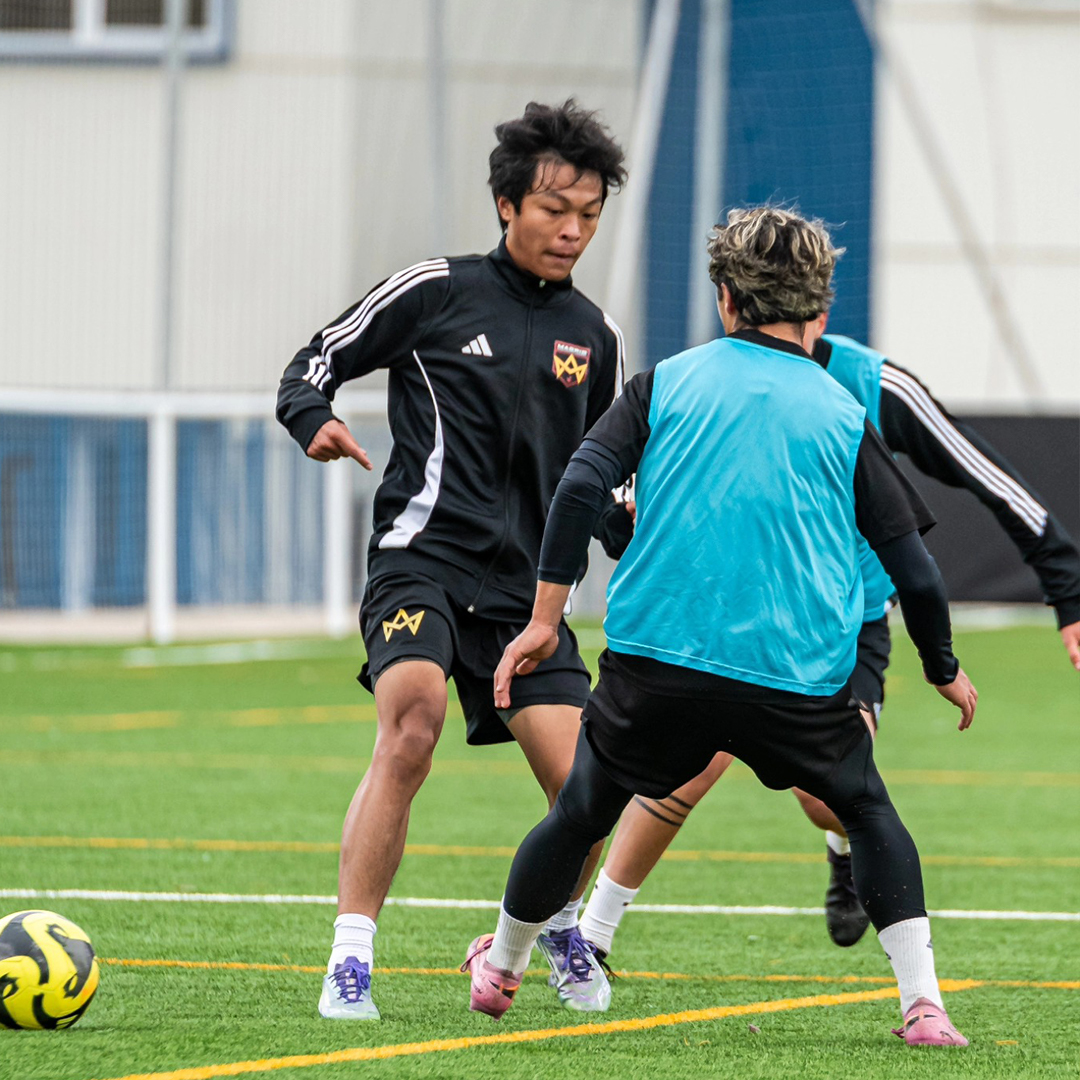
For Liam Sy, a Filipino player training at our elite football academy in Spain, the decision to play soccer there was intentional and purposeful. His experience reveals what it truly takes for Filipino players to break through and grow within Spanish football.
Choosing Spain: Culture and Competition
Spain stood out to Liam because of its football atmosphere and competitive culture. “You can really enjoy playing and feel the competitiveness of the players,” he says. He also notes the unique advantage of playing soccer in Spain: “It offers a different experience and level I wouldn’t get anywhere else.”
Liam cites Spain’s competition depth as what surprised him most about the country’s football culture. The Spanish league system has various levels of competition, which can be divided according to region, age, or competitive level. With numerous divisions that are each highly competitive, the structure can initially feel overwhelming. As Liam noticed: “There are so many divisions, and each one is highly competitive, even at the lower levels.” Yet, he acknowledged that it is the competitive nature of this system that “creates many learning opportunities and exposure, that [then bring] development.”
This is the realization that we aim to teach at MESA: that playing in Spain’s competitive youth system, while potentially daunting, is a player’s great advantage—precisely why our academy implements an integration program. By training and competing within the Spanish system, players are exposed to real match demands that accelerate development and sharpen tactical awareness.
Immediate Impact of Playing Soccer in Spain
According to Liam, the biggest transformation in his game has been his mentality. Since training in Spain, his confidence on and off the ball has improved, and his connection with teammates has strengthened.
Because the playing style in Spain emphasizes physicality—”making runs, defending back and forth,” Liam shares that playing with a Spanish team meant adopting a level of mental resilience.
Adjusting to Spain meant more than adapting to a new style of play. It was Liam’s first time living in Europe, and the cultural and language differences required patience and effort. Through studying and engaging with people around him, he grew not only as a footballer but as an individual.
A key difference he noticed compared to his experience back home was MESA’s personalized coaching approach. At our academy, each player follows an individual development plan—a difference from back home, Liam says, where the coaching style was “more focused [on the] team as a whole.”
This is the MESA advantage—we ensure that beyond improving team structure, coaches also address the specific needs of each athlete. This targeted development pushes players to take ownership of their progress.
A Message for Players and Parents
When asked to give tips to young international players who dream of playing abroad, his message is realistic: “You have to be ready to sacrifice and work hard. Don’t be afraid to step out of your comfort zone. He reminds players with the same ambition that if you want to play abroad, it means adapting to a new culture, language, and style of play—and that “these challenges will shape you as a player.”
Liam also highlights an important reality for parents considering Spain as a pathway: development in Spanish football takes time. “Spain’s football system is built around long-term development and not instant success,” he says.
Players do not become elite within one or two years. Progress is gradual and structured. This mirrors the Academy’s philosophy, which prioritizes sustainable growth through competition, personalized development plans, and immersion in Spanish football culture.
Spanish football demands adaptability, resilience, and patience. Liam’s experience shows that Filipino players possess these qualities and are ready to rise to the challenge. With the right environment and mindset, growth within Spanish football is not only possible—it’s transformative.
The Bigger Dream
At the heart of Liam’s journey is a clear ambition. He hopes to represent the Philippine national team one day.
Liam’s pursuit of daily improvement reflects this bigger purpose. He focuses on becoming better each day because representing the national team requires consistency—not occasional flashes of performance. It requires players who can adapt to different styles, maintain composure under pressure, and contribute within a collective structure.
His dream also serves as an example for younger Filipino players. Seeing someone from the Philippines commit to long-term development in Spain reinforces the idea that international standards are reachable with discipline and patience. It shifts the mindset from short-term success to sustained growth.
For Liam, the goal of wearing the national colors is more than symbolic. It is a responsibility. It reflects the belief that every training session, every adjustment, and every challenge in Spain contributes to something larger than himself.
Want to learn more about how we develop complete players?
You can explore our programs here.


For the latest on programs, camps,
trials and training tips.
For many young international players, playing football in Spain offers an opportunity to immerse themselves in one of the world’s most competitive football cultures. Spanish football is structured around long-term player development, technical mastery, and tactical intelligence. This philosophy is reflected in the development model of Madrid Euro Soccer Academy, which emphasizes holistic growth inside an authentic Spanish football environment.
For Liam Sy, a Filipino player training at our elite football academy in Spain, the decision to play soccer there was intentional and purposeful. His experience reveals what it truly takes for Filipino players to break through and grow within Spanish football.
Choosing Spain: Culture and Competition
Spain stood out to Liam because of its football atmosphere and competitive culture. “You can really enjoy playing and feel the competitiveness of the players,” he says. He also notes the unique advantage of playing soccer in Spain: “It offers a different experience and level I wouldn’t get anywhere else.”
Liam cites Spain’s competition depth as what surprised him most about the country’s football culture. The Spanish league system has various levels of competition, which can be divided according to region, age, or competitive level. With numerous divisions that are each highly competitive, the structure can initially feel overwhelming. As Liam noticed: “There are so many divisions, and each one is highly competitive, even at the lower levels.” Yet, he acknowledged that it is the competitive nature of this system that “creates many learning opportunities and exposure, that [then bring] development.”
This is the realization that we aim to teach at MESA: that playing in Spain’s competitive youth system, while potentially daunting, is a player’s great advantage—precisely why our academy implements an integration program. By training and competing within the Spanish system, players are exposed to real match demands that accelerate development and sharpen tactical awareness.
Immediate Impact of Playing Soccer in Spain
According to Liam, the biggest transformation in his game has been his mentality. Since training in Spain, his confidence on and off the ball has improved, and his connection with teammates has strengthened.
Because the playing style in Spain emphasizes physicality—”making runs, defending back and forth,” Liam shares that playing with a Spanish team meant adopting a level of mental resilience.
Adjusting to Spain meant more than adapting to a new style of play. It was Liam’s first time living in Europe, and the cultural and language differences required patience and effort. Through studying and engaging with people around him, he grew not only as a footballer but as an individual.
A key difference he noticed compared to his experience back home was MESA’s personalized coaching approach. At our academy, each player follows an individual development plan—a difference from back home, Liam says, where the coaching style was “more focused [on the] team as a whole.”
This is the MESA advantage—we ensure that beyond improving team structure, coaches also address the specific needs of each athlete. This targeted development pushes players to take ownership of their progress.
A Message for Players and Parents
When asked to give tips to young international players who dream of playing abroad, his message is realistic: “You have to be ready to sacrifice and work hard. Don’t be afraid to step out of your comfort zone. He reminds players with the same ambition that if you want to play abroad, it means adapting to a new culture, language, and style of play—and that “these challenges will shape you as a player.”
Liam also highlights an important reality for parents considering Spain as a pathway: development in Spanish football takes time. “Spain’s football system is built around long-term development and not instant success,” he says.
Players do not become elite within one or two years. Progress is gradual and structured. This mirrors the Academy’s philosophy, which prioritizes sustainable growth through competition, personalized development plans, and immersion in Spanish football culture.
Spanish football demands adaptability, resilience, and patience. Liam’s experience shows that Filipino players possess these qualities and are ready to rise to the challenge. With the right environment and mindset, growth within Spanish football is not only possible—it’s transformative.
The Bigger Dream
At the heart of Liam’s journey is a clear ambition. He hopes to represent the Philippine national team one day.
Liam’s pursuit of daily improvement reflects this bigger purpose. He focuses on becoming better each day because representing the national team requires consistency—not occasional flashes of performance. It requires players who can adapt to different styles, maintain composure under pressure, and contribute within a collective structure.
His dream also serves as an example for younger Filipino players. Seeing someone from the Philippines commit to long-term development in Spain reinforces the idea that international standards are reachable with discipline and patience. It shifts the mindset from short-term success to sustained growth.
For Liam, the goal of wearing the national colors is more than symbolic. It is a responsibility. It reflects the belief that every training session, every adjustment, and every challenge in Spain contributes to something larger than himself.
Want to learn more about how we develop complete players?
You can explore our programs here.
.svg)


